
The roster
| Boss | Opens at | Returns | Notes |
|---|---|---|---|
| Morgue Titan | Level 1 | 24 hours after it falls | A stitched brute chained beneath the city morgue. Your First Night strike lands here. |
| Subway Broodmother | Level 5 | 24 hours after it falls | The tunnel hive keeps feeding her fresh limbs. |
| Megawarren Colossus | Level 15 | 24 hours after it falls | A city-block corpse mound asleep under downtown. |
| Crimson Butcher | Battle Pass | Every 20 minutes | The Crimson Moon season boss, with richer drops for pass holders. |
How a hit works
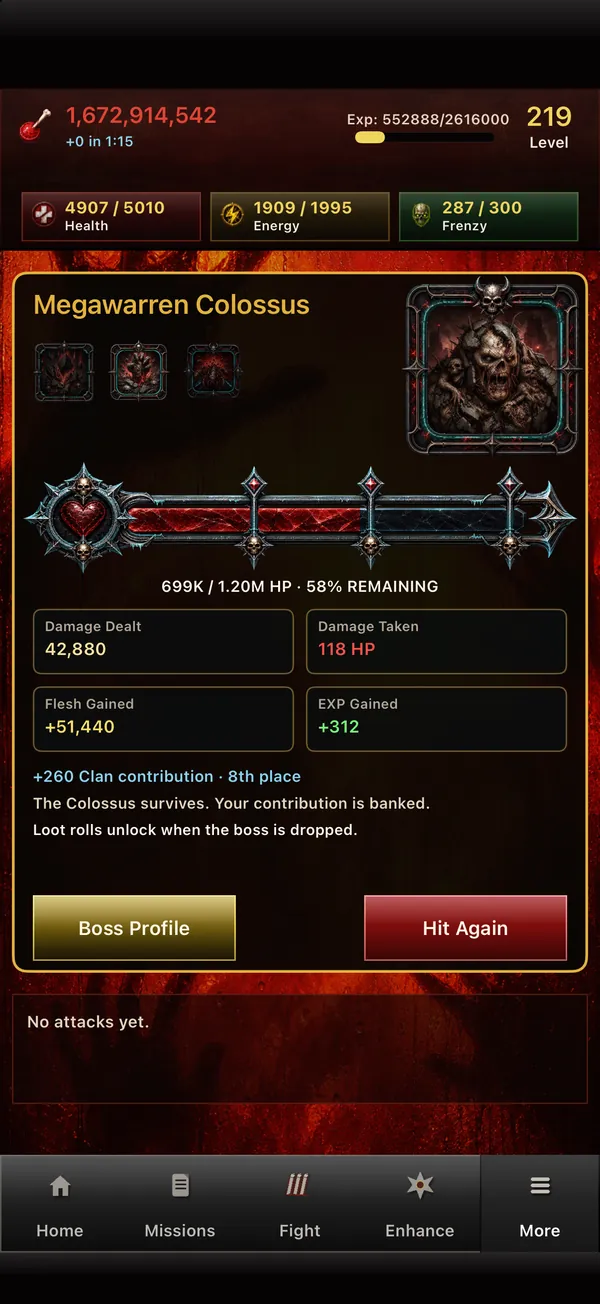
- Each hit costs the Energy and Frenzy shown on the boss card, and the boss hits back at your Health.
- Boss HP persists. Every zombie online is carving into the same body.
- Bosses shift phases as they bleed: some phases hit harder, some armor up, and the rewards rise as the boss weakens.
- Every hit earns Flesh, XP and points for your clan's weekly battle.
The kill
When a boss falls, everyone who drew blood gets kill credit (it counts toward Boss Kills) and a loot roll, and the final hit claims a killing-blow bonus. You'll get a News Feed entry for a boss you damaged, and the kill is announced on the Discord with the top three damage dealers.
Rend: damage that never fades
Every takedown of a permanent boss builds your Rend against it: extra damage, forever.
| Takedowns | Rend bonus |
|---|---|
| 1 | +1 |
| 5 | +2 |
| 10 | +3 |
| 25 | +5 |
| 50 | +7 |
| 100 | +9 |
| 250 | +12 |
| 500 | +15 |
| 1,000 | +19 |
| 10,000 | +25 |
Build tipBroodmind adds +5% boss damage and +5% clan boss points, and the Purple Apex adds +5% boss damage. Max Rend on three permanent bosses is part of the path to the Massacre Engine relic.
The boss dossier
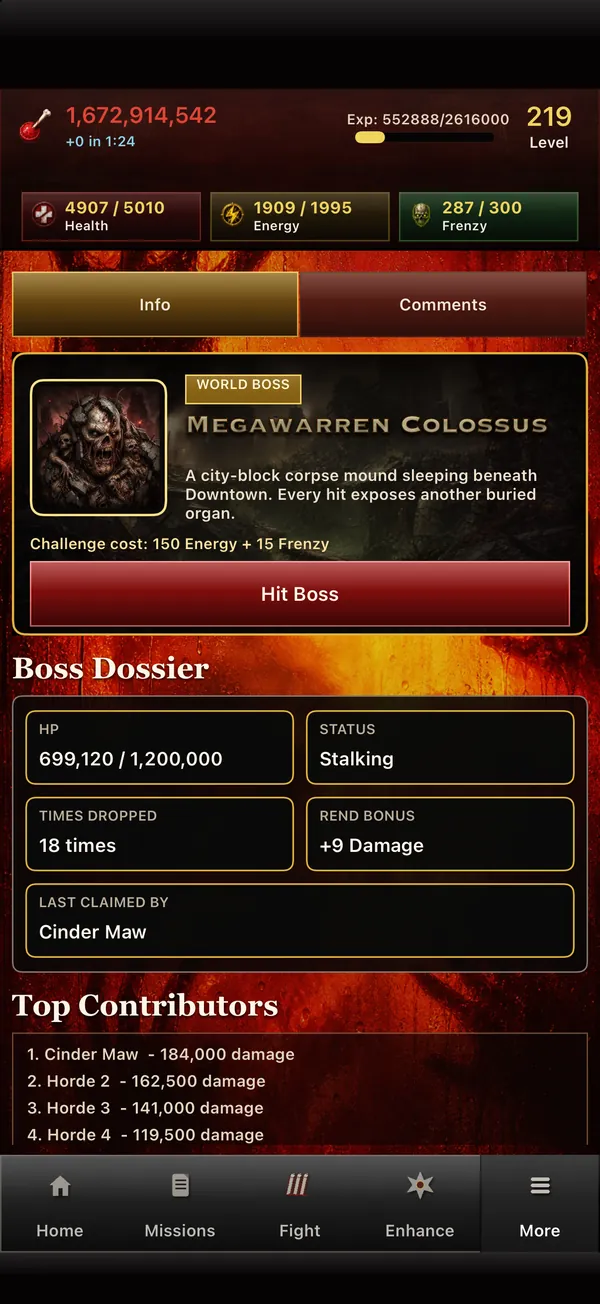
Open a boss's profile to see its HP, how many times it has fallen, your Rend bonus, the last claimant and the top contributors. Boss profiles take comments too.
Updated October 8, 2026. The game shows the current costs and rewards; live balance can change, and this guide follows it.