
Your first night
Every horde starts in the morgue. First Night is a guided run through the whole loop, six orders long, and it pays out at dawn:
- Escape. Run Escape from the Morgue before Warden Voss seals the wing.
- Arm yourself. Learn Bite Lunge. Your horde fights with its strongest Action.
- First blood. Attack an easy rival on the Fight board. Green is favored, gold is even, red is risky.
- Wake the Titan. One free strike on the Morgue Titan earns your first Mutation Point.
- Mutate. Spend it on a node beside your Origin, then tap Mutate.
- Set the bait. Set a Human Disguise. Lures earn Flesh every Fleshflow, even while you're away.
TipMissed a step or want a refresher? More → Help → Replay First Night Guide walks you through it again without resetting anything.
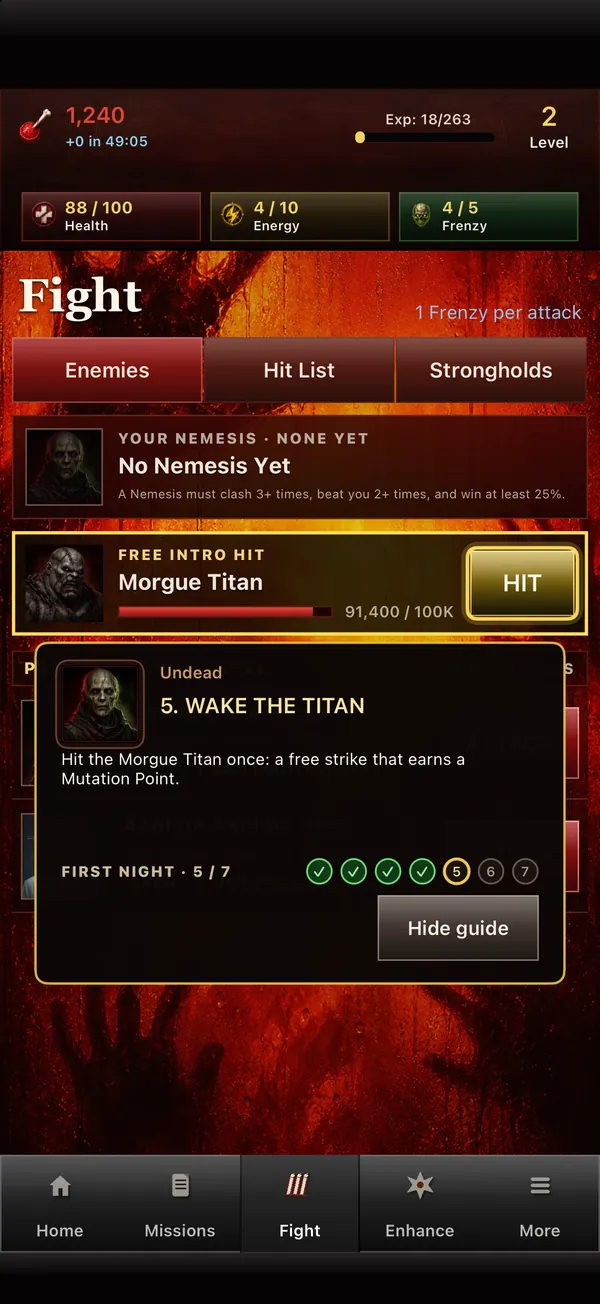
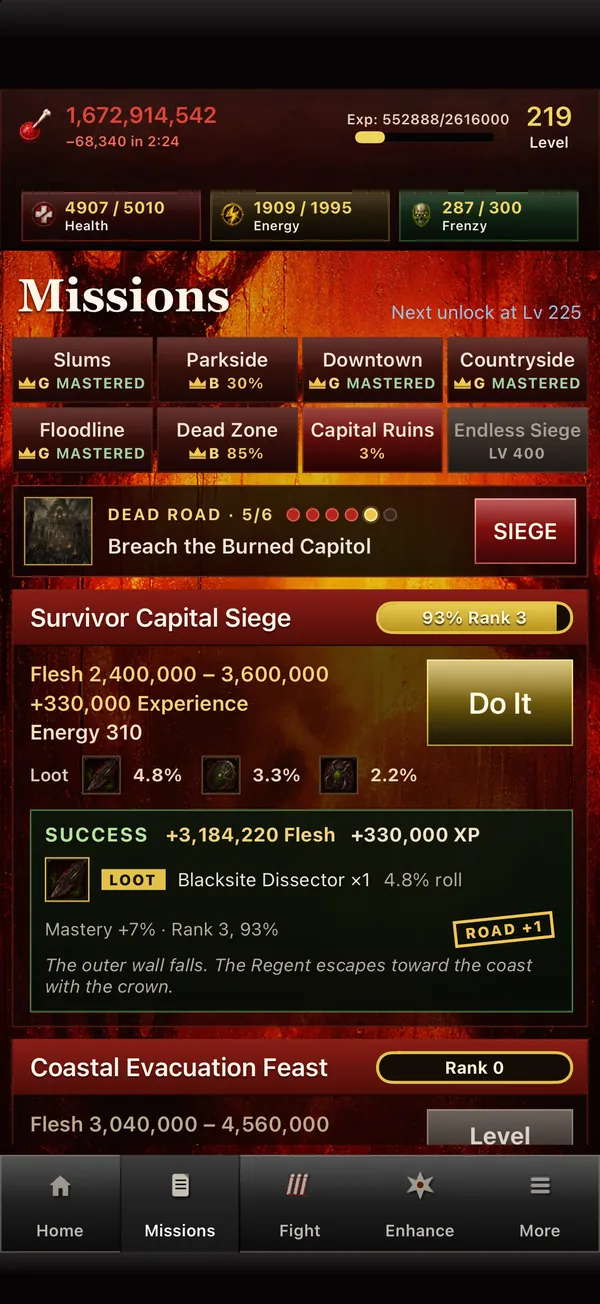
Read the top bar
Three bars and one number decide what you can do right now.
| Resource | Pays for | Comes back from |
|---|---|---|
| Energy | Missions and boss hits | Regeneration, a full refill on level-up, Market refills, the Battle Pass (2 free a day) |
| Frenzy | Fights and Hit List attacks (1 each), boss hits | Regeneration, a full refill on level-up, Market refills, the Battle Pass (2 free a day) |
| Health | Staying in fights | Regeneration, the Healer (Flesh), Emergency Stitch (LP), free ER heals with the Battle Pass |
| Flesh | Abilities, Lures, healing, bounties, stocks | Missions, fights, bosses, Lures, bank interest, Dead Exchange sales |
Two more currencies matter: Loyalty Points (earned from daily contracts, weekly Streaks payouts, invites and bug bounties, or bought) and skill points, which arrive with every level. Spend skill points in Stats on Attack, Defense, Max Energy, Max Frenzy or Max HP.
A strong first week
- Run your best mission. Push mastery on missions you'll repeat; every mastery rank pays a Mutation Point.
- Give skill points a job. Pick a goal (fighting, missions or bosses) and spend toward it instead of spreading points evenly.
- Build your Horde Loadout. Learn Action, Regenerative and Enhancement abilities on Enhance. Each horde member fights with your best of each type, so check the upkeep before you buy in bulk.
- Set Lures. They pay Flesh every Fleshflow (every 50 minutes), even offline.
- Bank before you log off. Exposed Flesh can be stolen; banked Flesh can't, and it earns 5% a day.
- Claim daily contracts. Five quick jobs for Loyalty Points, new every day at midnight UTC.
- Find your people. Invite friends to grow your horde, and join a clan for the weekly battle.
Save your horde
You start as a guest. Open More → Settings to save your horde with an email account (or Game Center on iPhone) so you can sign in on a new device.
Common early mistakes
- Logging off with Flesh exposed. Rivals can take a cut of it while you sleep.
- Emptying every bar at once. Keep enough Energy for a boss hit or the next mission you care about.
- Buying abilities without checking upkeep. Income, upkeep and horde size are one economy.
- Attacking by level alone. Read the color: green is favored, gold is even, red is risky.
- Confusing horde and clan. Your horde is personal fighting strength; your clan is a team with its own weekly score.
Updated October 8, 2026. The game shows the current costs and rewards; live balance can change, and this guide follows it.